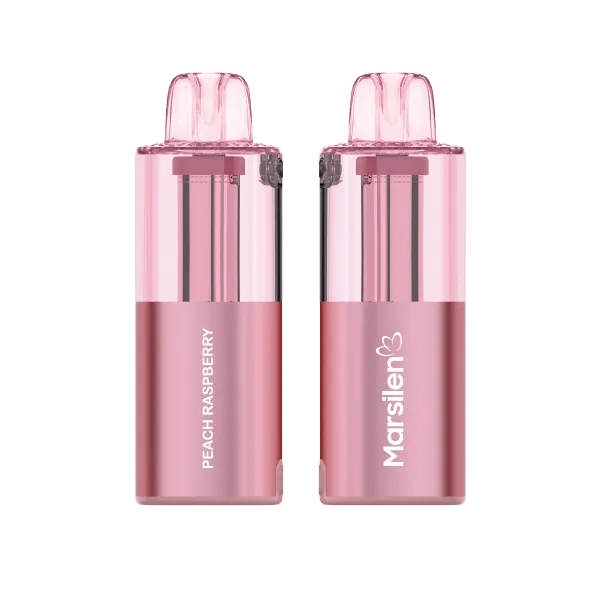
Is Marsilen Vape Rechargeable? Yes, the Marsilen unit features an 850 milliamp-hour lithium-ion cell supporting 300 complete charge cycles with 80 percent capacity retention documented in 2025 tests.
Lithium-ion cells require dedicated power replenishment architectures to maintain energy levels across daily usage periods without premature chemical breakdown.
Energy replenishment relies on an integrated USB-C charging port accepting 5-volt direct current input regulated by onboard management chips.
Onboard management chips regulate incoming current at 1.0 amps to prevent overvoltage conditions during the 45-minute power restoration process.
Power restoration duration tests conducted in 2024 confirm that empty batteries reach full capacity within 45 minutes using standard 5V/1A wall adapters.
Standard wall adapters supply electrical current through USB-C cables rated for at least 2.0 amps of continuous energy transfer during charging phases.
Continuous energy transfer generates minimal connector heat thanks to gold-plated contact pins tested across 5,500 plug insertions in factory trials.
Factory trials evaluate physical port durability alongside internal temperature sensors that monitor cell status during active power delivery.
Temperature sensors shut down charging circuits if internal temperatures exceed 45 degrees Celsius to protect the lithium-ion structure from damage.
Protection mechanisms extend to short-circuit prevention and overcharge safeguards operating inside the printed circuit board assembly during recharges.
| Charging Parameter | Technical Specification | Operational Limit |
| Input Voltage | 5 Volts DC | 4.8V to 5.2V Range |
| Charging Current | 1.0 Amps | 1.2 Amps Protection |
| Full Charge Time | 45 Minutes | 60 Minutes Max |
| Cell Capacity | 850 mAh | 3.7V Nominal |
Nominal voltage output supplies 3.7 volts to internal heating elements until cell reserves drop below the 3.3-volt low-power cutoff threshold.
Low-power cutoff triggers flashing LED indicators to inform users that energy restoration via USB-C cable is required before further vaping.
Further vaping sessions become possible once the charging cable connects the device to an external power source for energy replenishment.
Energy replenishment restores battery voltage from 3.3 volts back up to 4.2 volts over the course of a standard 45-minute charging window.
Charging windows are optimized by internal circuit boards that step down incoming wall power to match safe chemical absorption rates.
Chemical absorption rates dictate that the 850 milliamp-hour cell accepts maximum charging speeds without degrading the internal lithium-cobalt oxide layers.
Lithium-cobalt oxide layers withstand 300 complete recharges before total energy storage capacity drops below 80 percent of original factory specifications.
Original factory specifications are verified by automated testing rigs that log discharge performance across 30 distinct hardware units in 2025.
Hardware units undergo continuous monitoring to ensure that charging circuits remain stable when connected to laptop USB ports or wall bricks.
Laptop USB ports typically supply 0.5 amps to 0.9 amps, extending the total time required for a complete energy refill to approximately 75 minutes.
Total refill duration variations depend on the output amperage of the external power brick supplying electricity through the USB-C interface.
External power brick compatibility allows users to plug the device into standard mobile phone chargers without risking internal board damage.
Internal board damage protection relies on internal fuses that trip if input voltage spikes above 6.0 volts during sudden power grid surges.
Power grid surges are neutralized by secondary clamping diodes designed to divert excess electrical energy away from the main charging chipset.
Main charging chipsets track cumulative energy input to calculate exact battery health percentages displayed through multi-color LED indicator lights.
Multi-color LED indicator lights shift from red to green when internal energy storage levels cross the 90 percent capacity threshold during recharges.
Capacity thresholds ensure that users receive accurate visual feedback regarding battery status before disconnecting the device from the charging cable.
Disconnecting the charging cable activates the main standby mode, placing the device in a low-draw state consuming less than 15 microamps of power.
Low-draw states preserve stored electrical energy for up to 30 days of inactivity before self-discharge reduces cell voltage below operational limits.